
CHA To Install Additional Cameras At Developments
Daley Says Residents Will Have Say About Cameras' Placement
POSTED: 4:42 pm CDT July 6,
2005
UPDATED: 4:48 pm CDT July 6,
2005
CHICAGO -- The Chicago Housing Authority will install police surveillance cameras at additional developments, officials said Wednesday.
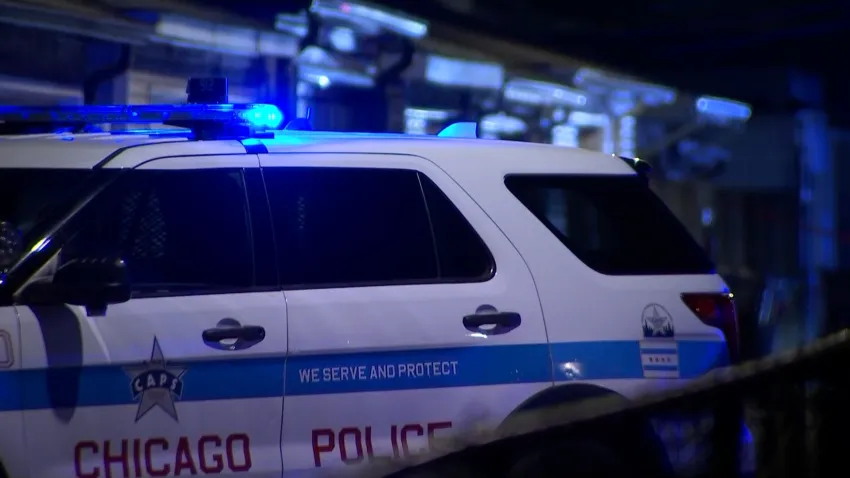
Ten cameras already are in place at various CHA complexes, including Cabrini-Green, and 14 more will be installed by the end of the year, according to Monique Bond, spokeswoman for the Office of Emergency Management and Communications.As with the cameras used under Operation Disruption, the CHA cameras will be placed in crime hot-spots and will be moved, if necessary, according to changes in crime statistics, according to Daley.Daley and CHA Executive Director Terry Peterson said residents would have input along with CHA officials and police on deciding where the cameras should be placed. A total of 16 developments will get the cameras, including Stateway Gardens, the Robert Taylor Homes, the Henry Horner Homes and the former ABLA complex.The new cameras feature the same bulletproof casing, 360-degree view, and wireless connection to the city's 911 Center as on the 75 cameras that will be in place by the end of the year under Operation Disruption, according to Peterson and Police Supt. Philip Cline.Daley said the cameras will also be equipped with the same acoustic sensors used to triangulate the position of nearby gunfire.When gunshots are detected by the cameras, an alarm is sent to the 911 Center and the camera's lens focuses on the area where the gunshot went off, according to Andrew Velasquez, executive director of the Office of Emergency Management and Communications. Officers dispatched to the scene can access the cameras with laptop computers installed in every squad car.In the areas where Operation Disruption cameras have been installed, Cline said police have seen a significant reduction in the number of violent crime, drug activity and gang activity."We have said all along that the hardworking, law-abiding people who live in public housing are no different from all Chicagoans, we all want a safe place for our children and our families," Cline said.Five older cameras previously placed at Cabrini-Green under Operation Disruption were installed before the city added gunshot sensors and wireless technology to the cameras, and will be replaced with five of the 24 new cameras purchased by the CHA, according to Peterson.The new cameras come as the CHA prepares to begin construction next year on Parkside of Old Town, a 718-unit mixed-income development at Cabrini Green. Under the plan, two CHA high rises -- at 630 W. Evergreen Av. and 1340 N. Larrabee St. -- will be torn down and the units within them replaced with various single-family homes and low-rise apartment buildings, according to Peterson.Daley said city officials are not concerned that the cameras pose a threat to privacy in high-density residential areas."When we first started (Operation Disruption), it was very controversial. Some elected officials said they don't want them in their communities. But I'll be very frank, if you go to any wealthy community, any high-rise in suburban areas, they have guards, they have technology, they have cameras. You can't get in their buildings," Daley said."Why is it people living in some of these struggling communities can't have the safety that everyone else has?" Daley added. "It's just using technology, it's only on the streets, the sidewalks and the alleys. We do not shoot into someone's apartment or their backyard or their front yard, it's just in public ways."The mayor said he was not worried that the cameras, which feature flashing blue lights similar to those on top of police squad cars, will deter middle-income families from buying homes in the mixed-income developments planned by CHA."Eventually, the blue lights will go off," Daley said. "Eventually, you'll have cameras but you don't need blue lights."Meanwhile, Velasquez said OEMC was still testing new software that would enable the city's entire surveillance camera network to automatically monitor for unusual activity, such as someone leaving unattended baggage near a public building or people accessing a restricted area.Daley said city officials cannot monitor every camera 24 hours a day. The city has a total of more than 2,000 surveillance cameras in place at various city facilities.Last September, Daley and other city officials announced the city would be upgrading its cameras with software designed to monitor for what they consider suspicious activity at critical infrastructure locations, including the Jardine Water Filtration Plant, public utility sites and other potential terrorist targets.Velasquez said the software is still being tested and he hopes to have the system in place by the end of this year.Information provided by City News Service.
Copyright 2005 by NBC5.com. All rights reserved. This material may not be published, broadcast, rewritten or redistributed.